
Quick Answer
Spouting cleaning involves removing leaves, debris, and built-up grime from your home’s gutters and downpipes to keep rainwater flowing freely. In Auckland, where annual rainfall averages around 1,200mm, blocked spoutings can lead to water damage, roof leaks, and even foundation problems. Most Auckland homes should have their spoutings cleaned at least twice a year, with properties near mature trees needing three to four cleans annually.
What’s in This Guide
- What Is Spouting Cleaning?
- Why Auckland Homes Need Regular Spouting Maintenance
- Signs Your Spoutings Are Blocked
- Spouting Cleaning Costs in Auckland
- How Often Should You Clean Your Spoutings?
- Why Choose Suds Wash Co
- FAQs
What Is Spouting Cleaning?
If you are new to home maintenance or have recently moved to New Zealand, you might not be familiar with the term “spoutings.” In Kiwi English, spoutings refer to the gutter and downpipe system that runs along the edge of your roof. Internationally, you would call them gutters and downspouts, but here in New Zealand the standard term is spoutings.
Spouting cleaning is the process of clearing out all the accumulated debris from your roof’s drainage system so that rainwater can travel from your roof, through the spoutings, down the downpipes, and safely away from your home’s foundations. Over time, leaves, twigs, dirt, moss, and even bird nesting material can build up inside your spoutings and create blockages.
A thorough spouting clean typically involves several steps:
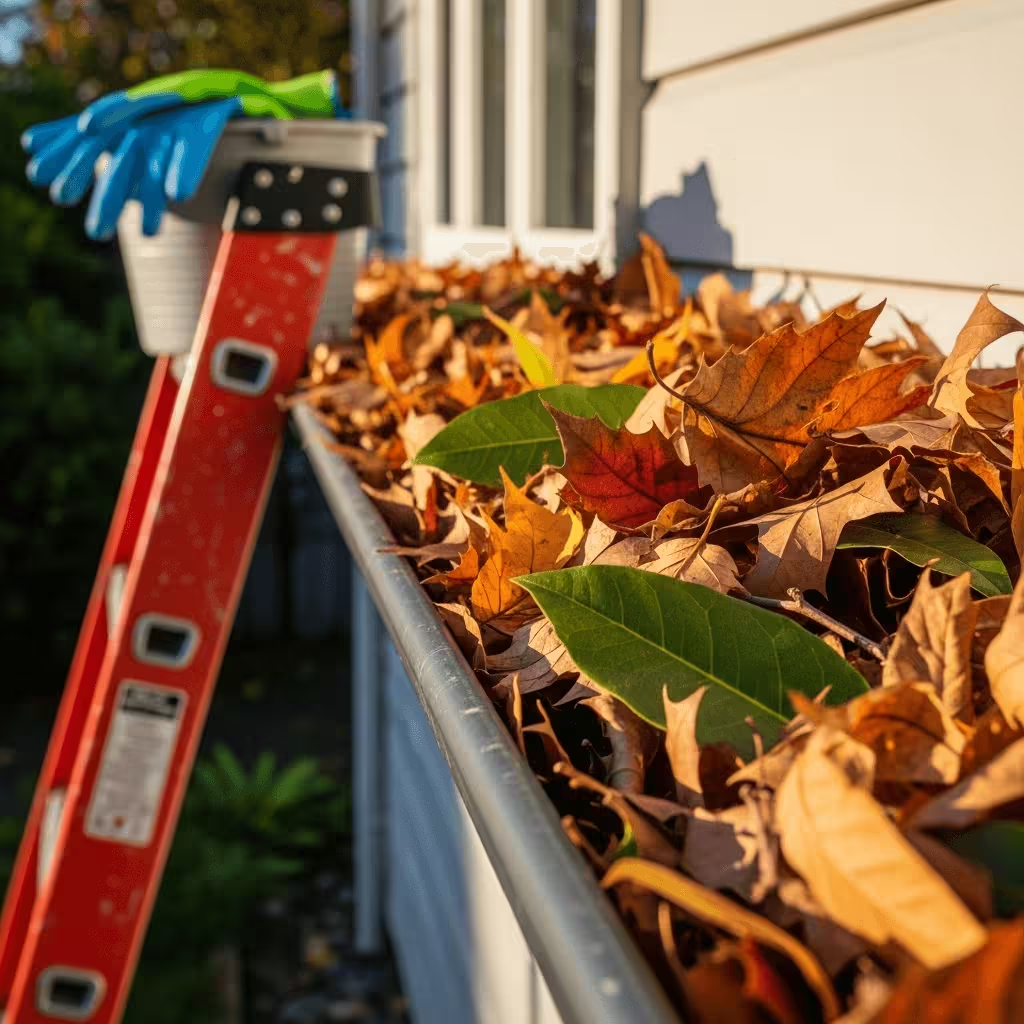
- Hand clearing of debris – removing leaves, twigs, pine needles, and sediment from the full length of every spouting run
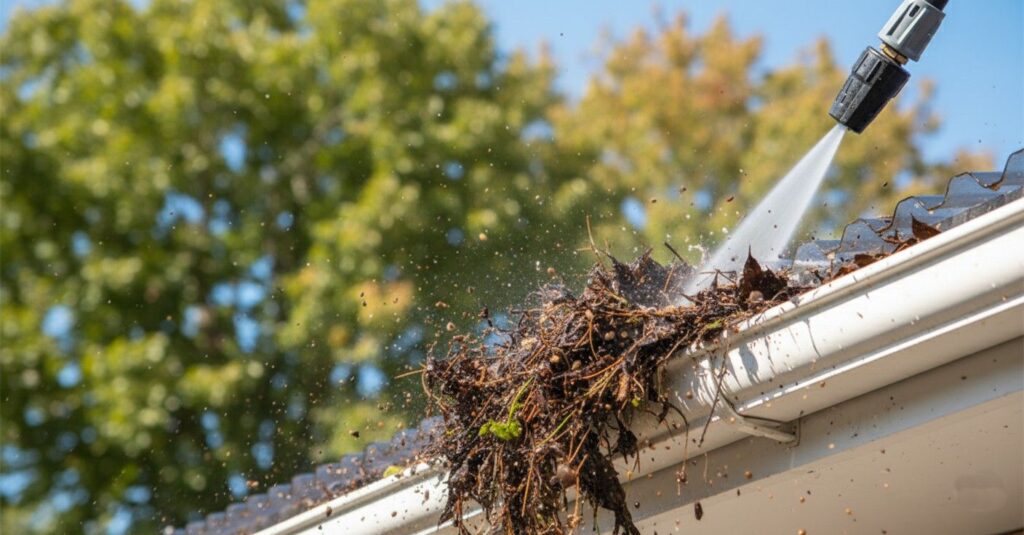
- Flushing with water – using a hose or pressure washer to flush remaining fine debris and check that water flows freely towards each downpipe outlet
- Downpipe clearing – checking that downpipes are not blocked and water runs freely from top to bottom
- Bracket and join inspection – looking for sagging sections, loose brackets, cracked joins, or rust spots that could lead to leaks
- Final flow test – running water through the entire system to confirm everything drains correctly
Professional spouting cleaning goes beyond just scooping out leaves. A trained team will identify early signs of damage, recommend repairs before small issues become expensive problems, and ensure your entire drainage system is working the way it should.
Why Auckland Homes Need Regular Spouting Maintenance
Auckland’s climate makes regular spouting maintenance essential rather than optional. Several factors unique to the region mean that Auckland homeowners face a higher risk of blocked and damaged spoutings than those in drier parts of the country.
High Annual Rainfall
Auckland receives an average of around 1,200mm of rainfall each year, spread fairly evenly across the seasons but with heavier downpours during autumn and winter. That volume of water needs somewhere to go, and your spoutings are the first line of defence. When they are blocked, heavy rain overflows directly onto your walls, paths, and foundations.
Mature Native and Exotic Trees
Many Auckland suburbs are lined with large pohutukawa, puriri, nikau palms, and exotic species like liquid amber and oak. These trees shed leaves, flowers, seed pods, and small branches throughout the year. Pohutukawa in particular drop masses of fine stamens after flowering in summer, which are notorious for clogging spoutings and downpipes. Properties surrounded by trees can see their spoutings fill up within weeks of being cleaned.
Coastal Salt Spray
For homes across Auckland’s coastal suburbs, from Devonport and Mission Bay to Titirangi and the Hibiscus Coast, salt-laden air accelerates corrosion on metal spoutings. Salt deposits mixed with organic debris create a sludge that eats into aluminium and steel over time. Regular cleaning removes this corrosive buildup before it causes permanent damage.
Seasonal Storms and Wind Events
Auckland is no stranger to storms, particularly during cyclone season. Strong winds deposit extra debris onto roofs and into spoutings, sometimes in a single event. After any significant storm, it pays to check your spoutings or have them inspected to catch any blockages or damage early.
Humidity and Moss Growth
Auckland’s warm, humid climate encourages moss, lichen, and algae growth on roofs. As these organisms spread, fragments wash down into your spoutings and create a dense mat that traps water and further debris. This biological buildup can be surprisingly heavy and difficult to shift without proper cleaning.
Signs Your Spoutings Are Blocked or Damaged
Blocked spoutings do not always announce themselves with a dramatic waterfall off the roof edge. Often the signs are more subtle, and catching them early can save you from expensive repairs. Here are the main warning signs every Auckland homeowner should watch for:
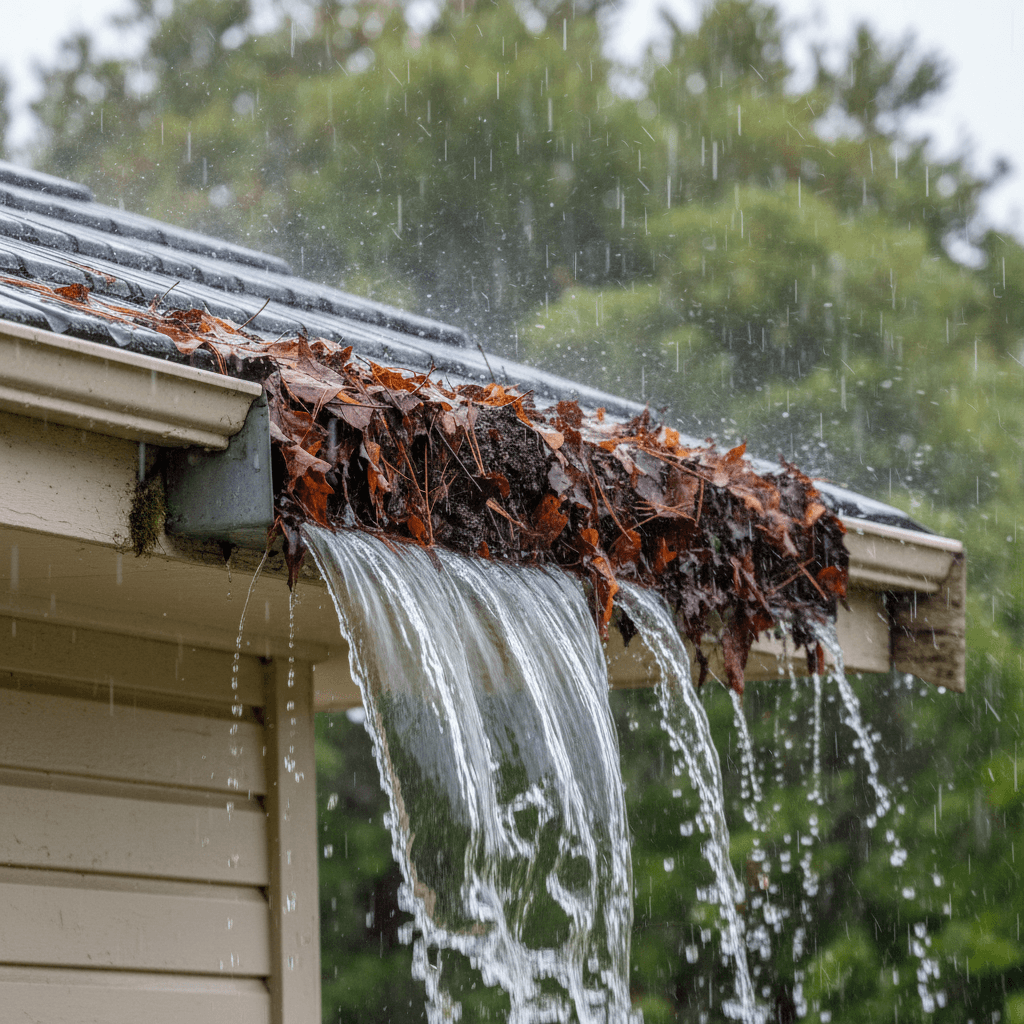
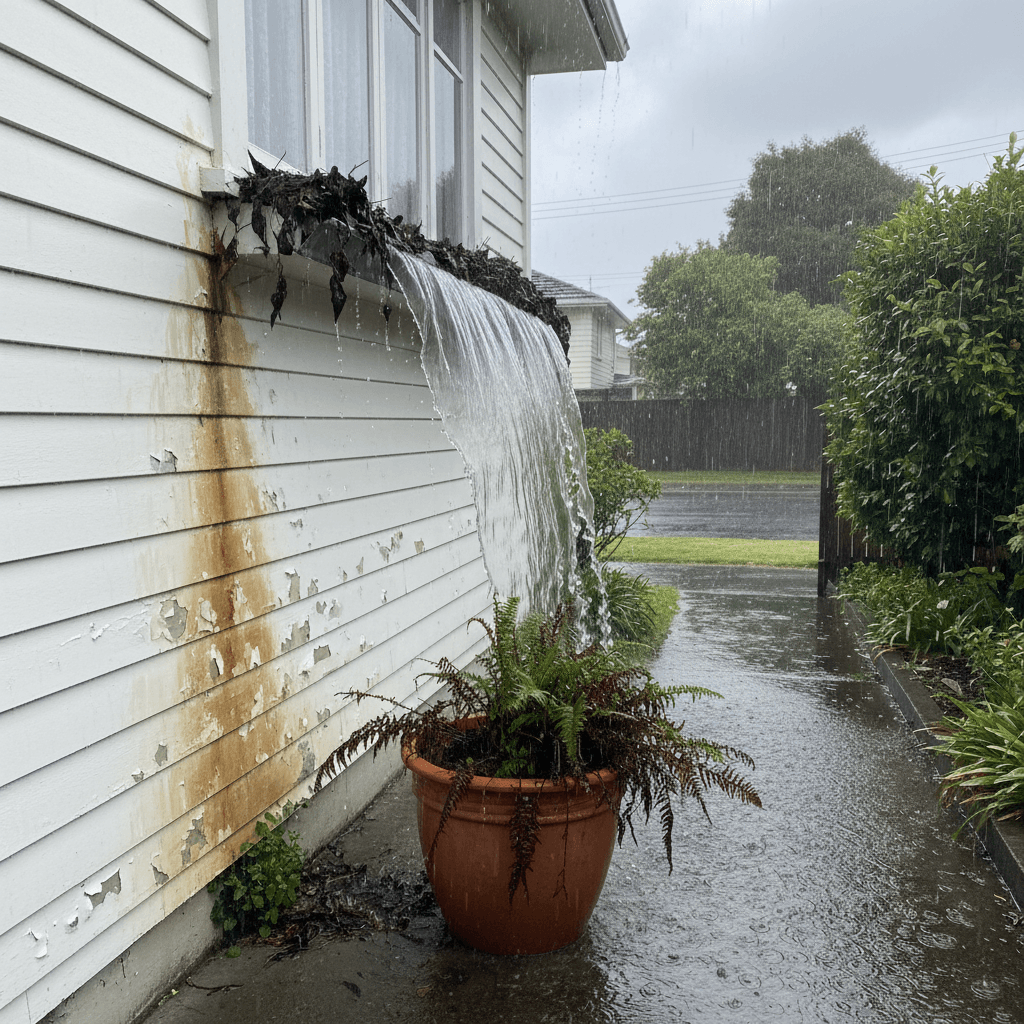
- Water overflowing during rain – The most obvious sign. If you see water cascading over the edge of your spoutings during a downpour rather than flowing to the downpipes, you have a blockage somewhere along the run.
- Sagging or pulling away from the fascia – When spoutings fill with heavy, waterlogged debris, the extra weight can pull brackets loose and cause visible sagging. Left unchecked, the spouting can detach entirely.
- Plants or weeds growing in the spoutings – If you can see small plants, grass, or even ferns growing out of your spoutings, there is a significant buildup of soil and organic matter that needs clearing urgently.
- Staining or streaks on exterior walls – Dirty water overflowing from blocked spoutings leaves visible stain marks down your weatherboards, plaster, or brickwork. These stains can be difficult and costly to remove.
- Damp patches or mould inside the house – If water is being forced back under roofing iron or behind fascia boards due to blocked spoutings, you may notice damp patches, musty smells, or mould growth on interior walls and ceilings near the roofline.
- Mosquitoes and insects around the roofline – Standing water in blocked spoutings creates a perfect breeding ground for mosquitoes. If you notice more insects than usual near your eaves, blocked spoutings may be the cause.
- Rust or corrosion spots – Visible rust on steel spoutings or white oxidation on aluminium is a sign that trapped moisture and debris are causing accelerated deterioration.
- Foundation dampness or pooling water – When water is not being directed away from the house via the downpipes, it ends up saturating the ground next to your foundations. Over time this can cause subsidence, cracking, and rising damp.
If you are noticing any of these issues, it is time to get your spoutings inspected and cleaned. For a deeper look at blockage symptoms, read our guide on the top signs your Auckland gutters are blocked.
Spouting Cleaning Costs in Auckland
Spouting cleaning is one of the most affordable forms of home maintenance when you consider what it protects against. The cost varies depending on the size of your property, the number of storeys, roof complexity, and how much debris has accumulated.
Here is a general guide to spouting cleaning costs in Auckland for 2026:
| Property Type | Typical Cost | Recommended Frequency |
|---|---|---|
| Single-storey home | $150 – $250 | Twice a year |
| Two-storey home | $250 – $400 | Twice a year |
| Multi-level / complex roof | $400 – $600+ | 2-3 times a year |
| Commercial property | $500 – $1,200+ | Quarterly |
These prices are typical for Auckland-based spouting cleaning services and may vary based on accessibility, the amount of debris, and whether minor repairs are needed. Many providers, including Suds Wash Co, offer free quotes so you know exactly what to expect before any work begins.
When you compare the cost of a regular clean against the potential expense of repairing water-damaged walls, replacing rotted fascia boards, or fixing foundation issues caused by poor drainage, spouting maintenance is a very worthwhile investment.
How Often Should You Clean Your Spoutings?
The right cleaning schedule depends on your property’s surroundings and roof type. Here is a practical guide for Auckland homeowners:
Standard Properties (Minimal Trees Nearby)
Twice a year is the minimum recommended frequency. The best times are late autumn (May-June) after the main leaf fall, and early spring (September-October) to clear anything that has accumulated over winter. This schedule keeps your spoutings clear through Auckland’s wettest months.
Properties Near Trees
Three to four times a year is more appropriate if you have mature trees overhanging or near your roof. A summer clean after pohutukawa flowering, an autumn clean after deciduous leaf fall, a winter check, and a spring clean will keep things manageable. If you are constantly clearing leaves from your spoutings, consider having gutter guards installed.
Coastal Properties
In addition to the standard twice-yearly clean, add an extra clean in late summer to remove salt deposits and any corrosive buildup. Salt spray combined with trapped organic matter is particularly damaging to both aluminium and painted steel spoutings.
After Major Storms
Always check your spoutings after significant weather events. Auckland’s storms can deposit large amounts of debris in a single night. Even if you recently had your spoutings cleaned, a storm can fill them up again quickly. A post-storm check can prevent damage from going unnoticed. For tips on dealing with leaf buildup specifically, see our guide on removing leaves from your gutters.
Why Choose Suds Wash Co for Spouting Cleaning in Auckland
At Suds Wash Co, spouting cleaning is one of our core services, and we take it seriously. Our team has cleaned thousands of metres of spoutings across Auckland, from single-storey bungalows in Mt Eden to multi-level homes on the North Shore and everything in between.
Here is what sets us apart:
- Experienced, trained team – Our crews know how to work safely at height and efficiently clear even the most heavily blocked spoutings. We carry the right equipment for every job, including vacuum systems for delicate roofs.
- Full drainage system service – We do not just scoop out leaves and walk away. Our gutter and spouting cleaning services across Auckland include downpipe flushing, bracket inspection, and a full flow test to make sure everything is draining properly.
- All areas of Auckland covered – From Pukekohe to Orewa, we service residential and commercial properties right across the Auckland region. No job is too far.
- Before and after photos – We document every job with photos so you can see exactly what was in your spoutings and the condition they are in after cleaning.
- Free, no-obligation quotes – We will assess your property and give you an upfront price with no hidden charges. If we spot any damage that needs repair, we will let you know and provide a separate quote.
- Bundle and save – Many of our Auckland customers combine spouting cleaning with a house wash, roof wash, or driveway clean. Bundling services saves you money and means your whole exterior is maintained in one visit.
Need Your Spoutings Cleaned?
Get a free, no-obligation quote from Auckland’s trusted exterior cleaning team.
Frequently Asked Questions
What is the difference between spoutings and gutters?
There is no difference. “Spoutings” is the New Zealand term for what is called gutters internationally. The system includes the horizontal channels (spoutings/gutters) that run along your roofline and the vertical downpipes (also called downspouts) that carry water to ground level. In New Zealand, you will hear both terms used interchangeably, but “spoutings” is the more common Kiwi term.
How much does spouting cleaning cost in Auckland?
For a standard single-storey Auckland home, expect to pay between $150 and $250. Two-storey properties typically range from $250 to $400. The exact price depends on the length of your spouting runs, roof accessibility, and how much debris has accumulated. Suds Wash Co offers free quotes so you can get an accurate price for your specific property.
Can I clean my spoutings myself?
While it is possible to clean spoutings on a single-storey home with a sturdy ladder, it is not recommended for most homeowners. Working at height carries real risk, particularly on two-storey homes or steep rooflines. Professional teams have the training, safety equipment, and tools to do the job safely and thoroughly. They can also spot potential damage that an untrained eye would miss.
What happens if spoutings are left blocked?
Blocked spoutings cause water to overflow and run down your exterior walls, leading to staining, paint damage, and moisture penetration. Over time, the trapped water can rot fascia boards and soffit lining, cause mould growth in wall cavities, damage foundations through ground saturation, and even attract pests. The repair costs from neglected spoutings can run into thousands of dollars, far more than regular cleaning.
Do you repair damaged spoutings too?
Yes. During every spouting clean, our team inspects brackets, joins, and the spouting material itself. If we find minor damage such as loose brackets or small leaks at joins, we can often repair it on the spot. For more significant damage like cracked or rusted-through sections, we will provide a separate quote for replacement. Catching damage early during a routine clean is the most cost-effective approach.
How long does a spouting clean take?
Most single-storey Auckland homes take between 45 minutes and 1.5 hours, depending on the amount of debris and the length of the spouting runs. Two-storey and larger properties may take 2 to 3 hours. We work efficiently without cutting corners, ensuring every section is cleared and tested before we leave.