Quick Answer: Clean concrete surfaces in Auckland using a stiff broom and mild detergent for routine maintenance, or a pressure washer at 1,500–3,000 PSI for deeper cleaning. Match your method to the stain type — oil needs a degreaser, rust needs a specialised remover, and mould needs a fungicidal wash. Auckland’s humidity means concrete grows mould faster than most of NZ, so aim to clean every 3–6 months.
What’s in This Guide
- Common Concrete Surfaces Around Auckland Homes
- How to Clean Different Stains on Concrete
- DIY vs Professional Concrete Cleaning
- Keeping Concrete Clean Year-Round
- Why Choose Suds Wash Co
- Frequently Asked Questions
Common Concrete Surfaces Around Auckland Homes
Not all concrete is created equal, and the type of finish on your surface determines how you should clean it. Using the wrong pressure or chemicals on the wrong surface can cause permanent damage.
Plain Concrete
The most common type on Auckland driveways and paths. Smooth or broom-finished, it’s relatively forgiving to clean but absorbs stains quickly if unsealed. Use up to 3,000 PSI with a 25-degree nozzle for heavy grime.
Exposed Aggregate
Popular for driveways and pool surrounds, this finish has decorative stones embedded in the surface. Clean with low pressure (under 2,000 PSI) and gentle brushing — high pressure can erode the cement paste binding the stones, causing pitting and loose aggregate.
Stamped or Patterned Concrete
Textured surfaces designed to look like stone, brick, or tile. Sweep regularly and use soft brushes with low-pressure rinses. High PSI wears down the patterns and can smooth out the textured grip that makes these surfaces safe when wet.
Concrete Pavers
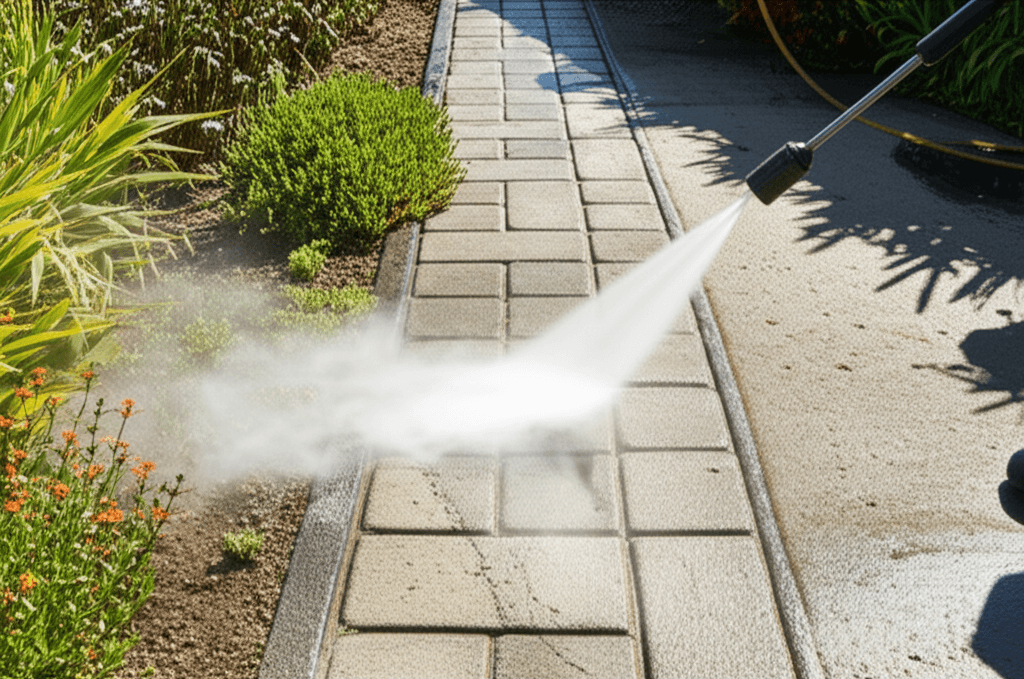
Individual units laid with sand-filled joints. Clean carefully around the joints — aggressive pressure washing dislodges the sand between pavers, causing them to shift and become uneven. Use a fan tip rather than a pinpoint nozzle.
How to Clean Different Stains on Concrete
The key to effective concrete cleaning is matching your method to the stain. What works on oil won’t work on rust, and using the wrong approach can set a stain permanently or damage the surface.
Oil and Grease Stains
Common on driveways from vehicle leaks. For fresh spills, absorb the excess immediately with paper towels or baking soda, then scrub with a stiff brush and degreaser. For set-in oil stains, apply a poultice (absorbent material soaked in solvent) and leave it overnight before scrubbing and rinsing. Products like Peter Fell’s Bio-Active Oil Stain Remover are formulated for NZ conditions.
Mould, Algae, and Moss
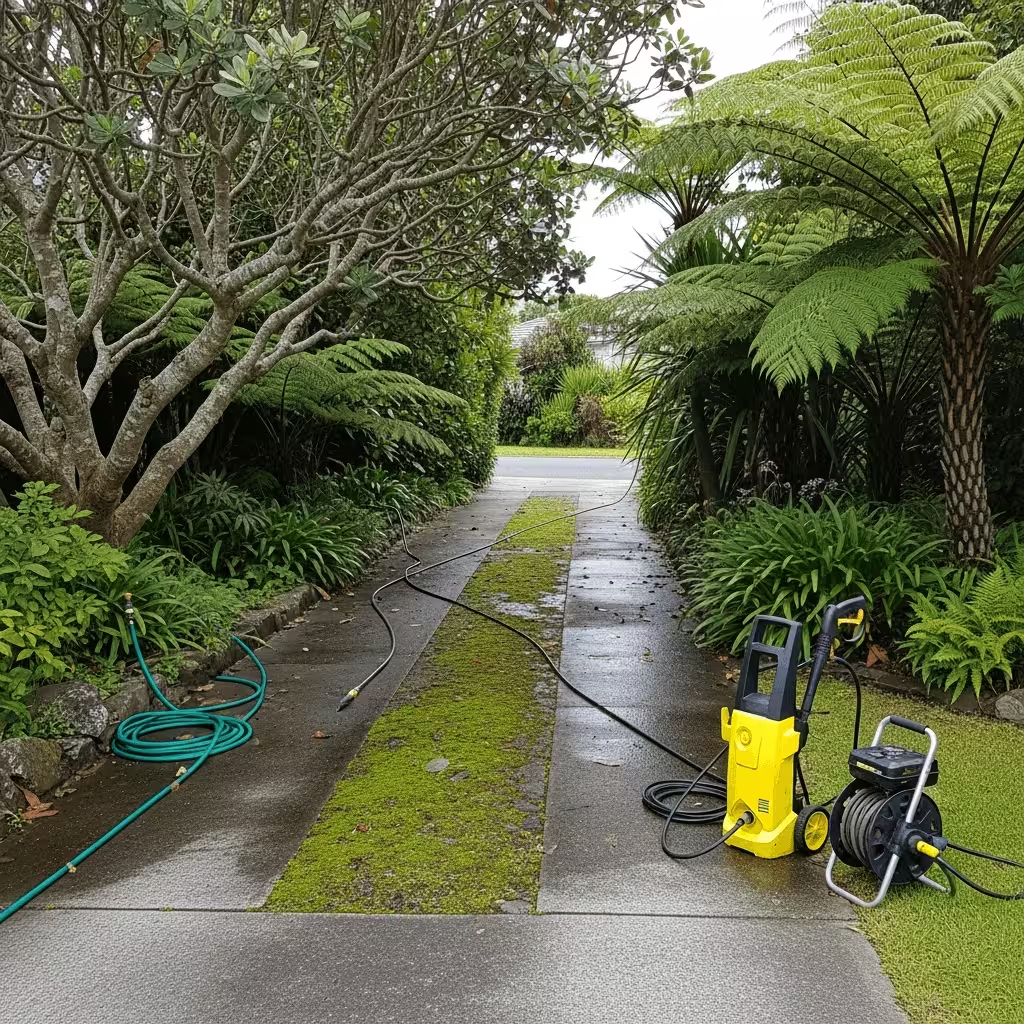
Auckland’s humidity (often 70–90%) makes this the most common concrete problem. Green or black growth thrives in shaded, damp areas and creates dangerous slip hazards. Scrub with a detergent and water solution, or apply a moss killer like Peter Fell’s Moss Kill. For heavy growth, low-pressure washing with a fungicidal treatment is more effective than scrubbing alone.
Rust Stains
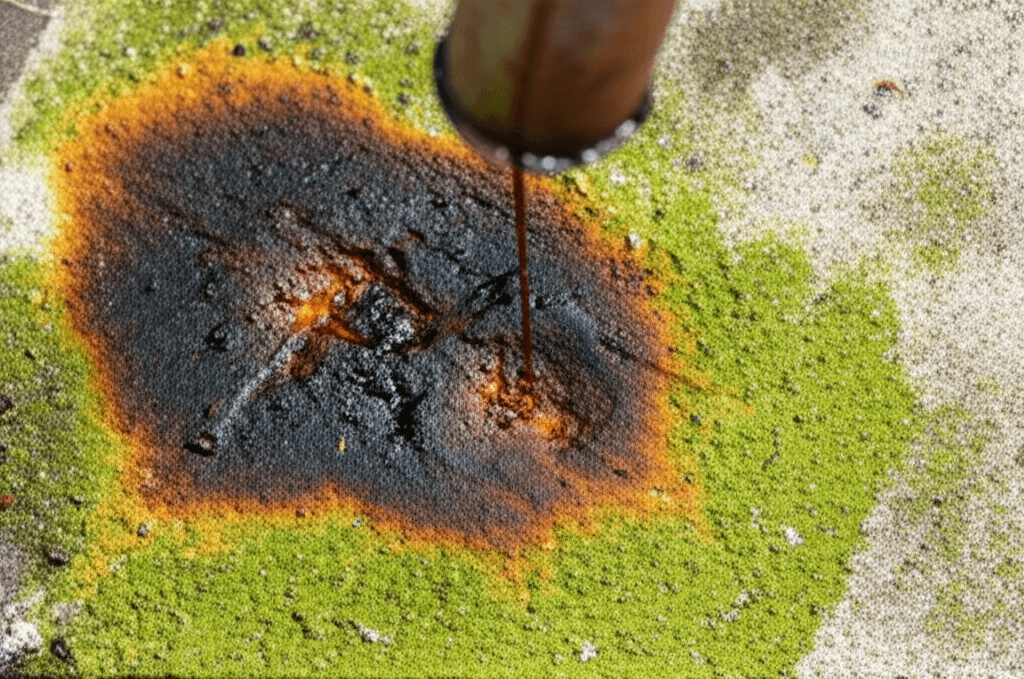
Usually caused by metal furniture, tools, or fertiliser left on concrete. Wet the area first, then apply a specialised rust remover and scrub gently. Avoid acidic cleaners on light-coloured or white concrete as they can cause discolouration.
Tyre Marks
Black rubber deposits from car tyres, especially on driveways. A paste of baking soda and water scrubbed with a stiff brush handles light marks. For stubborn tyre stains, a commercial concrete degreaser and some elbow grease usually does the job.
General Dirt and Grime
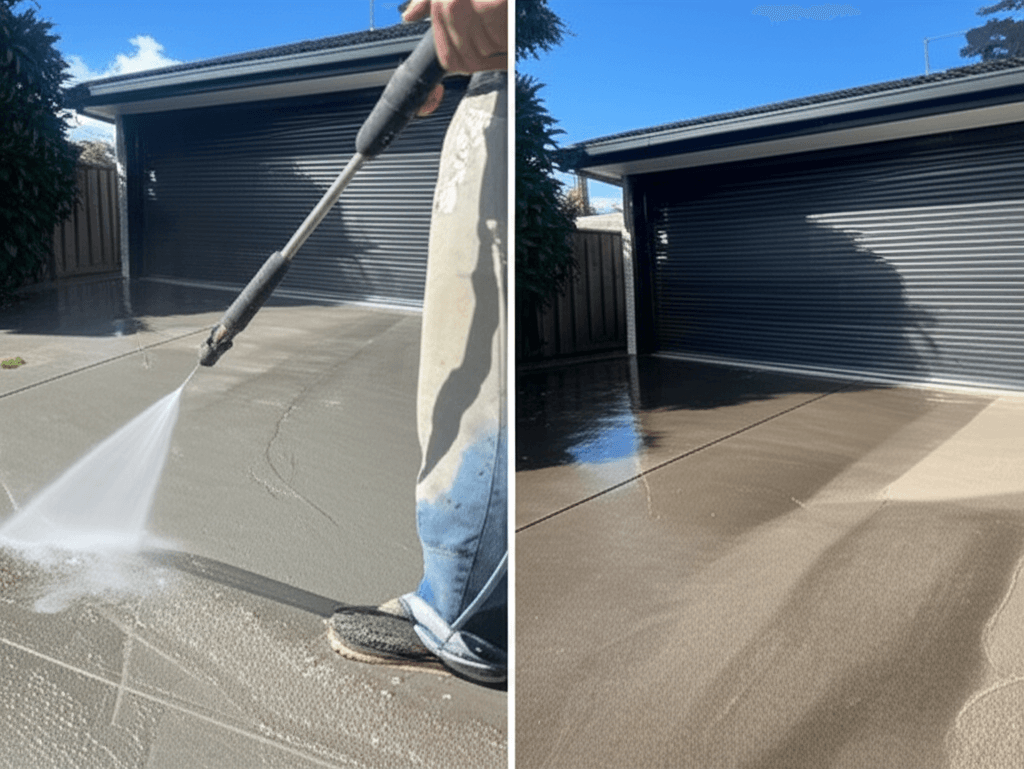
The everyday buildup from foot traffic, weather, and organic debris. A stiff broom and garden hose handle light soiling. For heavier buildup, a pressure washer at 1,500–2,500 PSI with a 25–40 degree fan tip cleans efficiently without risking surface damage.
| Stain Type | Best Method | Avoid |
|---|---|---|
| Oil/Grease | Degreaser + stiff brush, poultice for deep stains | Water alone (spreads the oil) |
| Mould/Algae | Fungicidal wash + low-pressure rinse | Bleach near gardens |
| Rust | Specialised rust remover, gentle scrub | Acid on white concrete |
| Tyre Marks | Baking soda paste or concrete degreaser | Harsh solvents |
| General Dirt | Pressure wash 1,500–2,500 PSI, fan tip | Pinpoint nozzle (etches surface) |
DIY vs Professional Concrete Cleaning
Both approaches have their place depending on the size of the job and the condition of your concrete.
| Factor | DIY Cleaning | Professional Cleaning |
|---|---|---|
| Best For | Routine maintenance, small areas, fresh stains | Large surfaces, set-in stains, exposed aggregate |
| Equipment | Broom, brush, garden hose, rented pressure washer | Commercial-grade pressure washers, surface cleaners, specialised solutions |
| Time | Half day to full day for an average driveway | 2–4 hours |
| Risk | Surface damage from wrong PSI, chemical burns, uneven results | Very low with experienced operators |
| Results | Good for maintenance | Deep clean, even finish, restoration-level results |
When to Call a Professional
- Your driveway or patio hasn’t been cleaned in over a year
- Heavy mould or algae that DIY methods can’t shift
- Exposed aggregate or stamped concrete that needs careful handling
- You want to combine cleaning with sealing for long-term protection
- Oil stains that have soaked deep into unsealed concrete
Keeping Concrete Clean Year-Round
Seasonal Maintenance Schedule
- Weekly: Sweep leaves, dirt, and debris — especially in autumn when organic matter traps moisture
- Monthly: Inspect shaded areas for early signs of mould or algae growth
- Every 3–6 months: Deep clean with detergent and pressure wash or scrub
- Every 2–5 years: Reseal concrete surfaces to maintain stain and moisture resistance
Sealing After Cleaning
Once your concrete is clean and fully dry (allow 24–48 hours), applying a sealer provides long-term protection. Water-based, eco-friendly sealers are the best choice for outdoor surfaces in Auckland. A good sealer repels oil and water, reduces future staining, and makes routine cleaning much easier. Two coats are standard, and you should plan to reapply every 2–5 years depending on traffic and exposure.
Quick Tips
- Act fast on spills: Fresh oil and rust stains are far easier to remove than set-in ones
- Keep drainage clear: Water pooling on concrete accelerates mould growth and surface degradation
- Move furniture periodically: Metal furniture left in one spot causes rust rings
- Trim overhanging trees: Reduces leaf drop, shade, and the moisture that feeds algae
- Use pot feet under planters: Prevents moisture rings and allows airflow
Why Choose Suds Wash Co for Concrete Cleaning
Auckland’s climate is tough on concrete — the combination of humidity, rain, and warm temperatures means surfaces need more frequent attention than drier parts of New Zealand. Our concrete pressure washing team adjusts techniques based on your surface type and condition, whether it’s a plain concrete driveway, exposed aggregate pool surround, or paver patio.
We also handle driveway cleaning across Auckland, so if your concrete driveway is part of a larger exterior clean, we can take care of the whole property in one visit.
What Sets Us Apart
- Surface-safe methods: We match pressure and cleaning solutions to your concrete type — no one-size-fits-all approach
- Eco-friendly products: Plant-safe, biodegradable cleaners that won’t harm your garden or pets
- Complete exterior service: Combine concrete cleaning with house washing, gutter cleaning, and more
- Kiwi-owned and operated: Local team that understands Auckland conditions
Frequently Asked Questions
What PSI should I use to pressure wash concrete?
For standard concrete driveways and paths, 1,500–3,000 PSI with a 25–40 degree fan nozzle works well. For exposed aggregate or stamped concrete, stay under 2,000 PSI to avoid surface damage. Always keep the nozzle 12–18 inches from the surface and sweep in a consistent direction.
How often should I clean my concrete in Auckland?
Every 3–6 months for a thorough clean, with regular sweeping in between. Auckland’s high humidity means mould and algae develop faster here than in drier regions, so shaded areas may need attention more frequently.
Can pressure washing damage concrete?
Yes, if done incorrectly. Using too high a pressure or a narrow nozzle can etch plain concrete, dislodge aggregate stones, wear down stamped patterns, or blast out the sand between pavers. That’s why matching the right PSI and nozzle to your surface type matters.
Should I seal my concrete after cleaning?
Yes, sealing is recommended — especially in Auckland’s humid climate. A water-based concrete sealer protects against moisture, oil stains, and biological growth. Apply after the surface is completely dry (24–48 hours after cleaning) and reapply every 2–5 years.
How do I remove oil stains from a concrete driveway?
Absorb fresh oil with paper towels or baking soda immediately. For set-in stains, apply a concrete degreaser or bio-active oil remover, scrub with a stiff brush, and rinse. Deep stains may need a poultice treatment left overnight.
What’s the best way to remove mould from concrete?
Scrub with a detergent and water solution, then apply a moss and mould killer formulated for concrete. Rinse with low-pressure water. For heavy growth, professional cleaning with fungicidal treatments gives longer-lasting results than DIY scrubbing alone.